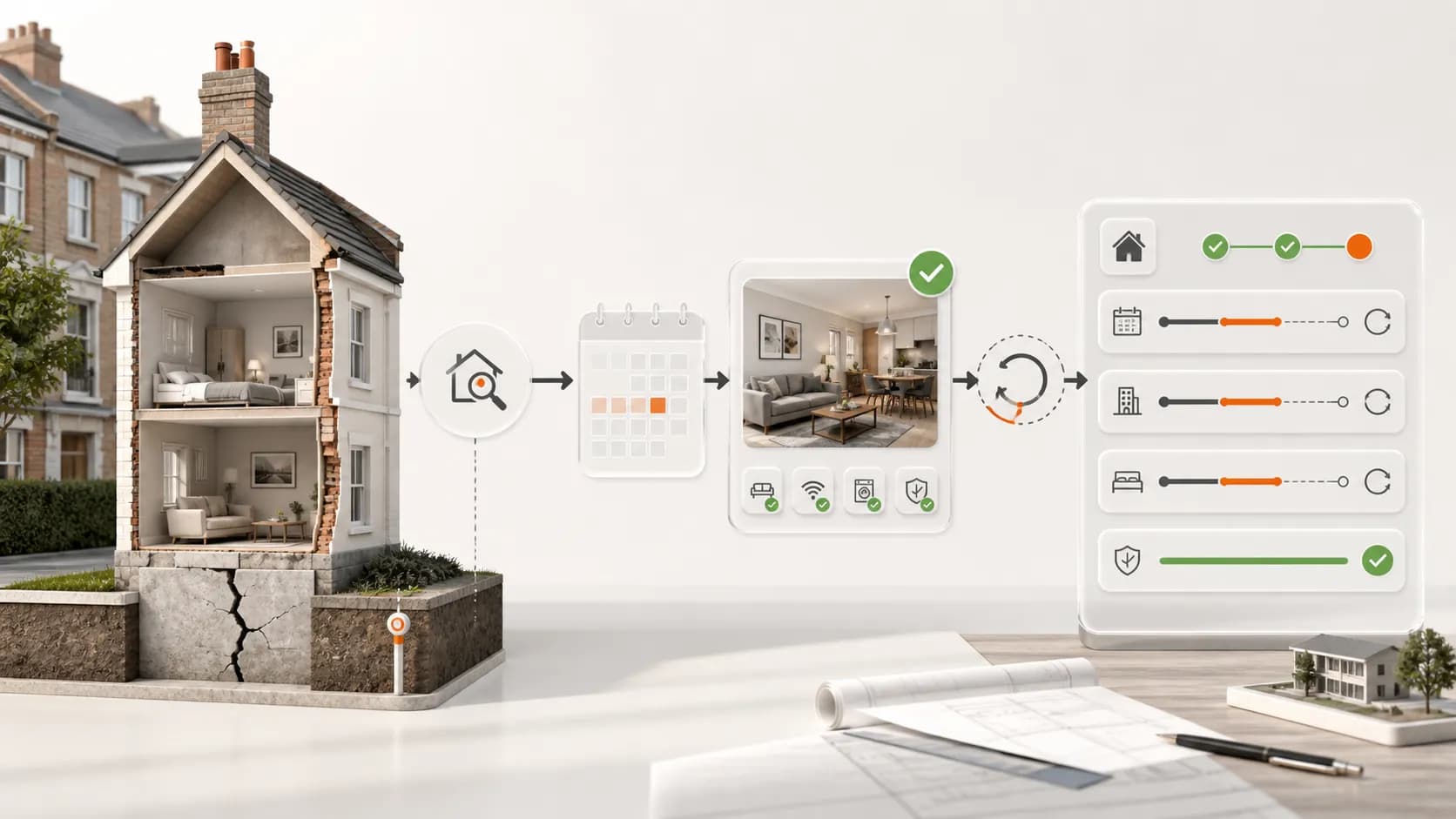
Temporary decant management is the process of moving residents out of their home while repairs or other essential work takes place, managing their temporary accommodation, and helping them move back once the work is complete.
The process becomes much harder when resident information, accommodation options, approvals and repair updates are spread across different emails and systems. Keeping everything in one place with a clear workflow makes decants easier to manage while still allowing for each household's individual needs.
Temporary decant management means moving a household out of its home while repairs or other essential work takes place. It covers the temporary booking, the stay and the return home.
The clearest approach is to keep each household's needs, options, approvals and dates in one shared record. This gives the team a consistent process while still treating every household individually.
Key Takeaways
- Start with the household and the reason for the move, not with a property search.
- Keep requirements, suitable options, decisions, costs and dates in one record.
- Review the placement if the household's needs or stay dates change.
- Plan for possible extensions before check-in to avoid another move.
- Use software to organise the work, while housing professionals remain responsible for decisions.
Why Temporary Decants Become Operationally Difficult
A planned decant may involve repairs or redevelopment. An emergency decant can begin with little notice, often while the team is already managing several other stays.
Problems usually begin when work passes between teams:
- the housing team receives incomplete repair dates;
- household needs are scattered across emails;
- suppliers reply at different times and in different formats;
- approvals are stored separately from the booking;
- the accommodation team hears about delays too close to check-out; and
- residents receive mixed updates from different people.
A simple process needs one clear owner and one shared case record. This gives the team reliable information without replacing professional judgement.
A Seven-Step Housing Association Decant Workflow
1. Confirm why the move is needed
Record why the household must move, when the move is needed and whether it is planned or urgent. Name the people who can approve the accommodation, any cost changes and the return home.
Government guidance says a temporary decant started by a landlord for repair work is not a Part 6 housing allocation. Housing providers should still follow their own policies and legal advice.
2. Record the household's needs
Before searching, use the same simple checklist for every household:
- household size and bedroom requirement;
- accessibility, mobility and equipment needs;
- school, work, care and support needs;
- pets, parking and transport;
- areas where the household can live;
- likely length of stay; and
- how and when the resident wants to receive updates.
Collect only the information needed to arrange the stay. Store it securely and limit access to the right people.
3. Set the search and approval plan
Turn the resident brief into a clear search: area, property type, dates, budget and essential needs. Decide what the team can book straight away and what needs further approval.
If repair dates may change, set a booking review date. Also check how much notice the accommodation provider needs for an extension.
4. Search available homes
Search using the agreed household needs. Compare the location, property, availability, price and booking conditions in the same format.
For urgent moves, the VivreStays emergency-housing solution supports quick placements and changing stay dates. For planned moves or larger programmes, explore the VivreStays decant workflow.
5. Record the decision and confirm the booking
Keep the property options, approval and confirmed booking together. Record who approved it, the dates, cost, supplier contact, booking conditions and information sent to the resident.
Anyone opening the case should be able to answer: “What has been agreed, and what happens next?” This also stops an old email from being mistaken for the latest update.
6. Review the stay and manage extensions
Set regular review dates and give the repairs team a clear deadline to confirm whether the placement should end or continue.
If the work runs late, first check whether the current accommodation can be extended. Review the household's needs, availability, cost and approval before confirming.
VivreStays lets housing teams track placements and end dates and manage extensions in the platform. Our guide to managing accommodation during surge events explains a similar approach for busy claims periods.
7. Arrange the return home
Once the property team confirms that the home is ready, agree the check-out and return arrangements. Do not give the resident a firm date before this confirmation.
Close the case with the final stay dates, total cost, extensions, problems and any permitted resident feedback. These records can reveal repeated delays and help improve future decants.
What a Useful Decant Control View Should Show
A decant dashboard should show the team what needs attention. It should answer these questions:
| Control | Practical question it should answer |
|---|---|
| Household status | Is the case being assessed, sourced, approved, booked, extended or returned? |
| Requirements | What must the placement provide, and who last confirmed the brief? |
| Booking dates | When are check-in, the next review and the current check-out? |
| Repair update | Who is providing the latest completion date, and when is it due? |
| Cost and approval | What has been approved, what has changed and who can approve more? |
| Supplier action | Is a confirmation, extension response or final invoice outstanding? |
| Resident update | When was the last agreed update and what is the next commitment? |
The dashboard supports the team. It does not replace housing policy, safeguarding or professional assessment.
Where Decant Management Software Adds Value
Software is useful when it reduces repeated admin and shows the latest position. VivreStays lets teams create household requests, shortlist properties, manage supplier replies, confirm bookings and handle extensions.
When evaluating any platform, ask whether it can:
- keep household needs attached to the booking;
- show live or clearly dated availability and prices;
- connect options, approvals and confirmations;
- highlight review and check-out dates;
- manage extensions without starting again;
- report on active placements, duration and spend; and
- keep a clear record of decisions and changes.
No platform can guarantee a suitable property in every place at every time. It should make the options, limits and next actions clear.
Frequently Asked Questions
What is a temporary decant?
A temporary decant moves a resident out of their usual home while essential work takes place. The intention is normally to return, so providers should explain how this differs from a permanent move.
What information should a housing association collect before searching?
Record the household size, dates, suitable areas, accessibility needs, work, school, care, transport and pets. Collect only what is needed and keep it secure.
How should a team assess whether temporary accommodation is suitable?
Review suitability for each household and check it again if needs or dates change. Government homelessness guidance covers location, accessibility, health and support needs, but it applies to local-authority homelessness duties. Housing associations should follow their own decant policies and advice.
How can housing teams reduce avoidable moves during a decant?
Use realistic stay dates, schedule early reviews and check extension terms before booking. If the work runs late, compare an extension with a new placement before check-out becomes urgent.
Can decant management software make the legal or resident decision?
No. Software can organise information, searches, approvals and bookings. Housing professionals must still apply policy, consider the household's circumstances and make the decision.
Make the Next Decant Easier to Control
If your process relies on spreadsheets, inboxes and last-minute calls, compare one live case with the seven steps above. This will show where clearer ownership or a shared system could help.
Request a VivreStays demonstration to see how household requests, property searches, bookings and extensions can be managed in one place.
Sources
- VivreStays — Decant accommodation management software — public product evidence for household requests, shortlisting, supplier responses, booking tracking and extensions.
- GOV.UK — Allocation of accommodation guidance, Chapter 1 — distinction concerning landlord-initiated temporary decants for repairs.
- GOV.UK — Homelessness Code of Guidance, Chapter 17: Suitability of accommodation — individual suitability factors and continuing review, cited with an explicit scope caveat.
- GOV.UK — Awaab's Law guidance for tenants in social housing — background on temporary alternative accommodation options and consideration of household needs in the applicable hazards context.