Suitable accommodation isn't just the first property available at the right price. It should meet the policyholder's essential needs, fit their daily routine, and be suitable for the expected length of their claim. Claims teams should also be able to show how accommodation options were considered, shared, and agreed.
This framework provides a simple, consistent way for claims teams to make these decisions. It is not legal advice and does not replace policy terms, professional judgement, or company compliance procedures.
Key Takeaways
Identify essential needs before considering preferences.
Check the needs of everyone in the household, including accessibility, work, school, caring responsibilities, medical appointments, pets, and transport.
Choose accommodation that is suitable for the expected length of the stay.
Record why each option was accepted, rejected, or approved as an exception.
Schedule a review when the booking is made to avoid last-minute extensions.
What Suitable Policyholder Accommodation Means
Suitable accommodation is a temporary home that meets the household’s essential needs during their claim. It doesn’t have to be exactly like the insured property, but it should allow the household to continue their normal daily life as much as possible.
Alternative accommodation should be assessed on a case-by-case basis. Factors such as the type of property, work, school, and day-to-day routines should all be considered.
Suitability is about more than just price, location, or the number of bedrooms. It should also take into account accessibility, travel, the expected length of stay, available facilities, and the likelihood of needing to move again.
Start With the Household, Not the Property List
A quick search using only a postcode and number of bedrooms can miss important needs and lead to unsuitable results.
Start with a simple checklist to capture the household’s essential requirements. Only collect the information needed to find and manage suitable accommodation, while following data protection and vulnerability procedures.
Capture key details such as:
Who will be staying and the sleeping arrangements required.
Any mobility, access, medical, or support needs.
School, work, care, and treatment travel requirements.
Pets, parking, and transport needs.
Essential facilities such as cooking and laundry.
Expected length of stay and confidence in the repair timeline.
Preferred contact and communication needs.
Policy limits, approval requirements, and any exceptions.
The FCA expects firms to understand how vulnerability can affect customers and the support they need. In practice, this means having a human option available when standard processes do not meet the household’s needs.
The Seven-Check Suitability Framework
1. Household Capacity and Daily Life
Confirm who will be staying, the number of bedrooms needed, and whether separate sleeping areas are required. Check essential needs such as cooking, laundry, and storage, especially for longer stays.
2. Accessibility and Individual Needs
Check access to the property, the layout, bathroom facilities, and any support needed. Always ask the policyholder about their needs rather than making assumptions.
Service providers may have duties to make reasonable adjustments under the Equality Act 2010. The GOV.UK guide for service providers explains the general duty, but claims teams should seek their own legal or compliance guidance for specific cases.
3. Location and Essential Journeys
Assess suitability based on essential journeys, not just distance from the damaged home. Consider work, school, medical appointments, caring responsibilities, and transport needs.
During a major event, local supply may tighten. The guide to managing alternative accommodation during surge events explains how to widen searches under agreed rules.
4. Likely Duration and Property Type
A hotel may work for a short stay but become unsuitable over several weeks. Self-contained accommodation can better support everyday needs such as cooking, laundry, privacy, and normal routines.
Treat repair dates as estimates, not guarantees. Record how certain the expected timescale is and choose accommodation that can be extended easily if delays occur.
5. Pets, Parking and Practical Facilities
Pets and parking needs can affect which properties are suitable. Confirm these requirements before sharing options, along with essentials such as internet, laundry, cooking facilities, and any other important household needs.
6. Cost Boundaries and Approval
Compare the total expected cost of the accommodation, not just the nightly rate. Consider the length of stay, possible extensions, and any extra costs linked to the location or property type.
Check policy terms, limits, and approval requirements before confirming an option. If an exception is needed, record who approved it, why it was suitable, and what alternatives were considered
7. Continuity and Extension Readiness
Ask if the property can be extended, how much notice is needed, and what happens if availability changes.
Set a review date when the booking is made. The VivreStays solution helps insurers manage searches, options, bookings, and extensions in one place, keeping dates, decisions, and costs connected. The platform supports decision-making but does not replace the team’s judgement on what is suitable for each household.
A Repeatable Decision Workflow
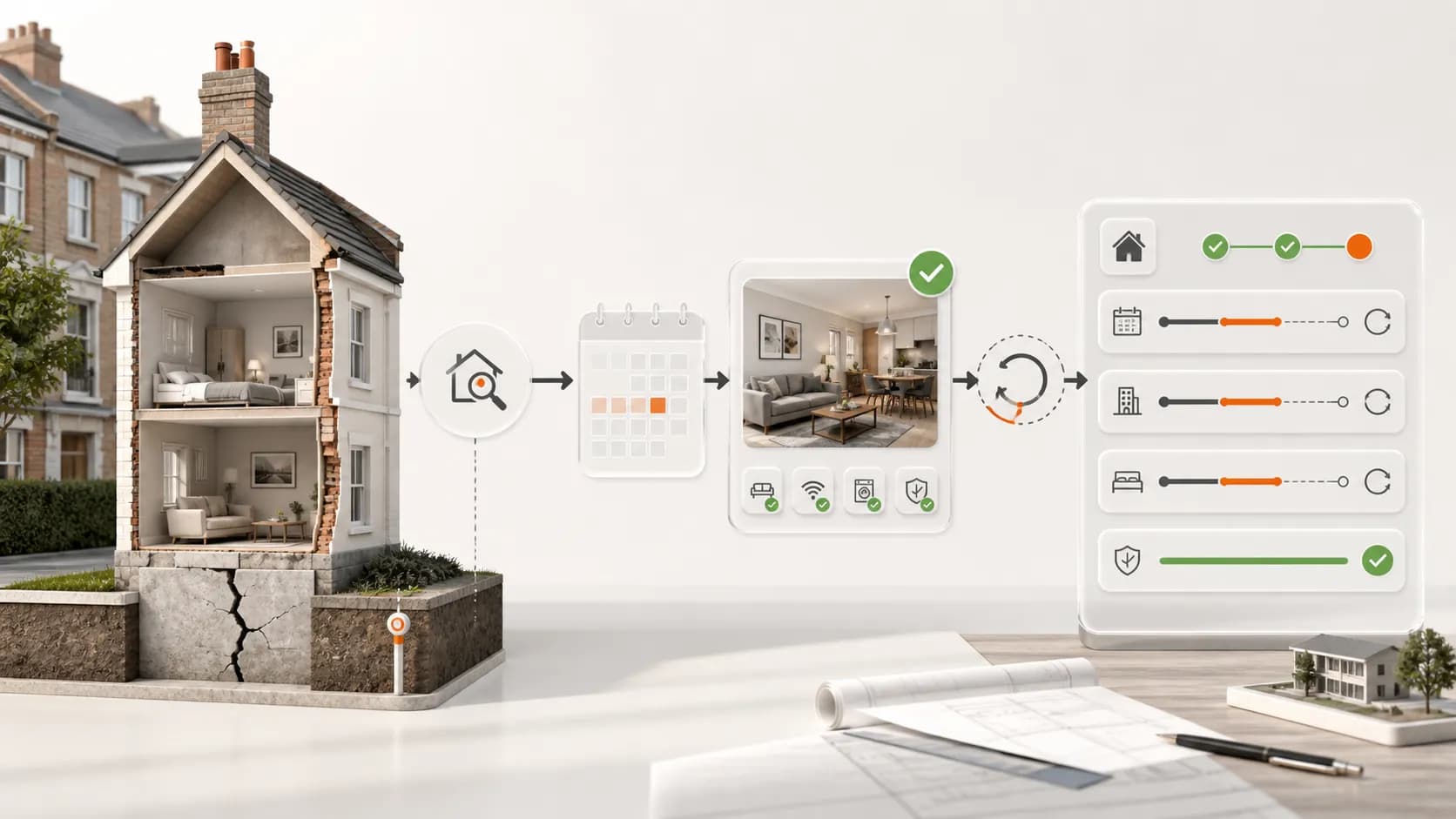
Capture needs. Record the household details, practical requirements, expected stay, and policy limits.
Classify requirements. Identify what is essential, preferred, or requires an exception.
Search and enquire. Use live availability where possible and keep supplier responses in one place.
Check options. Review each property against the key suitability checks.
Share options clearly. Provide details of the property, location, facilities, dates, costs, and any key considerations.
Record the decision. Keep a record of options provided, the chosen property, and any approvals or exceptions.
Plan the review. Set a review date before the booking ends to manage repairs or extensions.
This makes the next action clear and helps another handler understand the decision if the claim changes hands.
For teams focused on early-stage speed, live accommodation availability can reduce avoidable enquiry loops. Speed is useful only when the resulting shortlist still meets the household’s needs.
Frequently Asked Questions
What makes accommodation suitable for a policyholder?
It should meet essential needs, support normal routines, and be suitable for the expected length of the claim. The decision depends on the household, policy terms, available options, and professional judgement.
Should insurers provide a like-for-like property?
Not always. The right option depends on the policy and the household’s needs. Location, facilities, accessibility, and length of stay can be just as important as the property type.
How many accommodation options should be offered?
There is no set number. A small shortlist of suitable options is often more helpful than many unsuitable ones. Record why options were considered and the policyholder’s response.
What if no property meets all requirements?
Separate essential needs from preferences, explain any compromises, and escalate where needed. Record the options considered and get the correct approval before proceeding.
When should an extension be reviewed?
Set the review date when the booking is made. Review the repair progress, availability, cost, and potential disruption of moving before the current stay ends.
Make Suitability Easier to Manage
A strong process links household needs, accommodation options, decisions, approvals, bookings, and extensions together. When information is spread across emails and spreadsheets, important details can easily be missed.
VivreStays helps insurers search live accommodation, share shortlisted options, confirm bookings and manage extensions in one platform. Request a VivreStays demonstration to explore how a more structured suitability workflow could fit your claims operation.
Sources
FCA: Guidance for firms on the fair treatment of vulnerable customers
VivreStays: Managing alternative accommodation during surge events
VivreStays: Reducing claims cycle time through live accommodation availability